Let’s Game The Casino
Frictionless Data One-Year Anniversary!


To celebrate the one-year anniversary of publishing Frictionless Data, I’m sharing the article I used to announce it. Enjoy!
Way back in 2011, the film Moneyball told the story about how the Oakland A’s used data to outsmart the old-school scouts and coaches. The team’s General Manager, Billy Beane (played by Brad Pitt), revolutionized baseball with data-driven decision-making. The small-market, low-budget A’s couldn’t afford the salaries other teams would pay players in free agency, so they had to find new, less expensive ways to win.
For example, Beane ignored his scouts (who relied on their personal experience and insight) and found washed-up hitters who got on base a lot. The scouts pointed out that all these players had issues, like injuries, questionable behavior, and aging arms. But that’s what made them attractive to Beane. It made them affordable.
“We are card counters at the blackjack table. And we're gonna turn the odds on the casino,” Beane told the scouts.
The movie came out in 2011, after American companies embraced analytics as a core business strategy. How Beane’s data-driven baseball decisions would play out in the business world wasn't clear when Michael Lewis published Moneyball (the book) in 2003. It was the movie that cemented the idea of using data for decisions in popular culture. Business leaders already believed that idea by 2011, and even today, they use the term “Moneyball” as a shorthand for using data to get ahead.
Today, everyone agrees that companies should use data for all decisions. They’re just not sure how it really works.
The CIO dilemma
The real Billy Beane was a business manager, just like you. Management chronically underfunded and understaffed his team, but still expected them to compete with top teams like the Yankees and their seemingly unlimited payroll. The Oakland A's won 102 games that season but failed to win a playoff series, then the rest of the league quickly caught up with their data-driven ideas.
The A's finally left Oakland last season. They stopped gambling and headed to Vegas, where they'll try to attract a bigger fan base and (presumably) compete by spending money, just like everyone else.
That story illustrates the challenge facing every business leader today: can you close the gap between data and decisions by spending money on AI? Most companies do the same thing the A’s finally did, fixing their problems with expensive software solutions.
The problem with data is not about capturing more of it. It’s about connecting data to business decisions.
A Management Approach
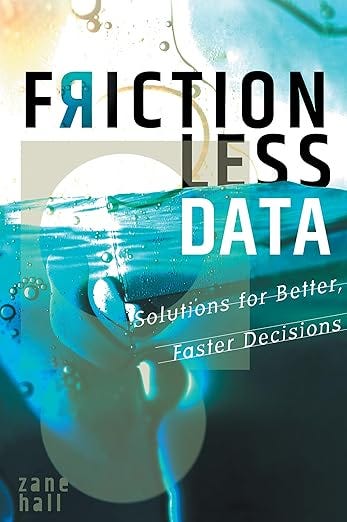
I couldn’t find any books focusing on how to make this connection, so I wrote one. It’s called F(r)ictionless Data: Solutions for Better, Faster Decisions. It’s not a technical read – far from it. I’ve purposely written it with entertaining, real-life anecdotes from my 25-year career managing corporate data teams.
I’m excited to announce that Frictionless Data is available on Amazon today.
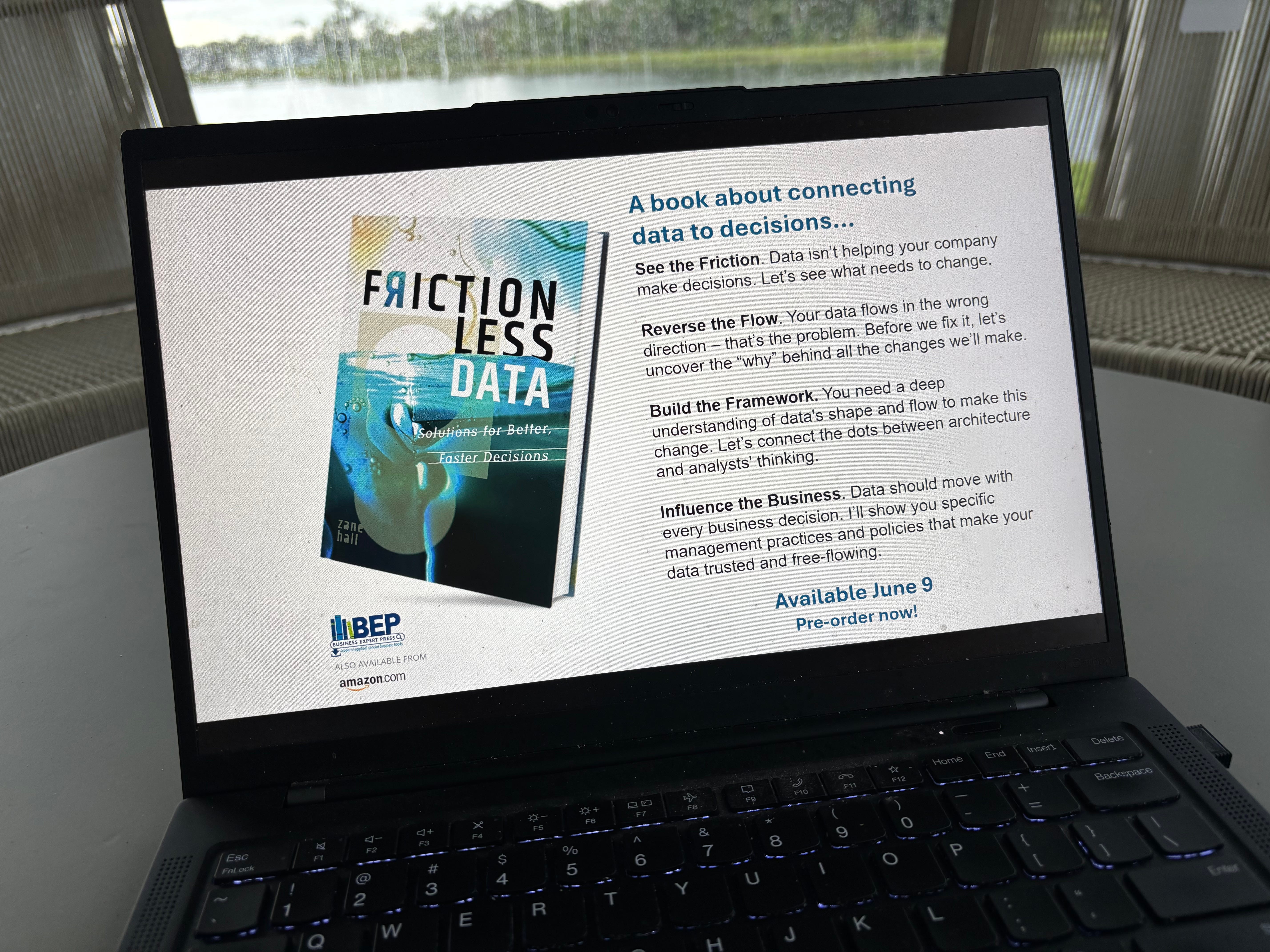
In Frictionless Data, I explain how to make the connection in four parts:
See the Friction. Data isn’t helping your company make decisions, so I’ll help you see what needs to change.
Reverse the Flow. Your data flows in the wrong direction – that’s the problem. Before we fix it, I’ll help you see the “why” behind all the changes we’ll make.
Build the Framework. To make this change, you need a deep understanding of data's shape and flow. That’s how we’ll connect the dots between architecture and analysts' thinking.
Influence the Business. Data should move with every business decision. That means you’ll need to change the way you work. I’ll show you specific management practices and policies that make your data trusted and free-flowing.
I believe you can do this at your company. I’m here for you. There’s no silver bullet for better decisions, but managing your data better, like I’ll show you, is your best hope to make the connection. Let’s game the casino together, not like the movie, but in real life. You don’t need new technologies to do this; you need new management skills.
There’s a better way: Frictionless Data.
Comments from pre-release readers:
“I like the short, punchy chapters, your inviting voice as a narrator, and the clear, actionable takeaways.”
“It addresses a very important, but understudied, key area behind a firm’s successful business intelligence strategy. The book is written in an easy-to-read conversational style.”
“You've got a great knack for making an otherwise dry subject into a compelling read!”
“It definitely hit the right notes!”
“Battle-tested strategies through real-world case studies.”
“It not only met but exceeded my expectations.”
“I think it will appeal to a broad range of information professionals, from managers to the C-suite, and it successfully communicates its ideas and strategies in a refreshingly jargon-free way.”
“The macro-level perspective on data integration is interesting.”

To remind you of this week’s data concept, enjoy The Card Cheat, by The Clash, from the Frictionless Data Spotify playlist.
For the full story about making data flow faster and better, check out Frictionless Data on Amazon.